Service
Sunlight simulation for properties
I work out how much direct sun a particular flat or house gets over the year: through which windows, in which months and for how long. And how much of it the buildings around take away.
At a glance
- Result
- direct sun by room and month
- Surroundings
- shadows of nearby buildings included
- Model
- digital twin of the building and its surroundings
- For
- buyers, sellers, estate agents, developers
01 Example
South-facing, and no sun in December
The windows face due south, and yet in winter they may not get a single minute of sun. It depends on the building opposite and on the floor you live on.
This is an illustrative example, not a real building: picture a building in Mladá Boleslav with a ground floor and 5 upper floors, its front facing due south. Across the street, 22 m from the facade, stands a continuous block 15 m high.
For the centre of the south-facing window on every floor, I calculated the direct sun minute by minute for every day of 2026. The section shows true noon on three days of the year: how far the shadow reaches and where the sun falls through the window.
The three lowest floors get no direct sun on any day in December. Anyone buying a flat on a lower floor should know this before they sign.
Section at true noon
On 21 June at noon the sun is 63° above the horizon, and the shadow of the building opposite ends on the ground 14.4 m in front of ours. Yet it shines on the south facade for only 9 h 12 min (8:26–17:38): the sun rises in the north-east and sets in the north-west, behind the plane of the facade. At noon the sunlight reaches only 0.5 to 1.1 m into the room.
On 20 March at noon the sun is 40° above the horizon, and the shadow of the building opposite ends on the ground 3.8 m in front of ours. Every floor gets direct sun, 11 h 56 min to 11 h 59 min. At noon the sunlight reaches 1.1 to 2.7 m into the room.
On 21 December at noon the sun is only 16° above the horizon. The shadow of the building opposite reaches 8.6 m up our facade. The ground, 1st and 2nd floors get no direct sun all day. On the 3rd floor the sun shines for 4 h 47 min (9:35–14:22), on the 5th floor for 7 h 47 min. On the upper floors the noon sun reaches deep into the room, 3.1 to 7.6 m from the window.
G = ground floor, 1–5 = upper floors. Windows: sill 0.9 m, head 2.2 m above the floor.
02 The whole year
Floor by floor, month by month
How many hours a day direct sun reaches the south window when the sky is clear. The average for each month.
| Floor | Jan | Feb | Mar | Apr | May | Jun | Jul | Aug | Sep | Oct | Nov | Dec |
|---|---|---|---|---|---|---|---|---|---|---|---|---|
| 5 | 8.4 | 9.9 | 11.5 | 10.9 | 9.8 | 9.2 | 9.5 | 10.5 | 11.6 | 10.5 | 8.8 | 7.9 |
| 4 | 7.8 | 9.6 | 11.5 | 10.9 | 9.8 | 9.2 | 9.5 | 10.5 | 11.6 | 10.3 | 8.3 | 7.2 |
| 3 | 6.0 | 8.7 | 11.3 | 10.9 | 9.8 | 9.2 | 9.5 | 10.5 | 11.6 | 9.7 | 6.8 | 5.0 |
| 2 | 1.5 | 7.1 | 11.0 | 10.9 | 9.8 | 9.2 | 9.5 | 10.5 | 11.5 | 8.7 | 3.3 | 0 |
| 1 | 0 | 3.2 | 10.6 | 10.9 | 9.8 | 9.2 | 9.5 | 10.5 | 11.4 | 6.5 | 0 | 0 |
| G | 0 | 0.1 | 9.4 | 10.9 | 9.8 | 9.2 | 9.5 | 10.5 | 11.3 | 2.5 | 0 | 0 |
| Month | G | 1 | 2 | 3 | 4 | 5 |
|---|---|---|---|---|---|---|
| January | 0 | 0 | 1.5 | 6.0 | 7.8 | 8.4 |
| February | 0.1 | 3.2 | 7.1 | 8.7 | 9.6 | 9.9 |
| March | 9.4 | 10.6 | 11.0 | 11.3 | 11.5 | 11.5 |
| April | 10.9 | 10.9 | 10.9 | 10.9 | 10.9 | 10.9 |
| May | 9.8 | 9.8 | 9.8 | 9.8 | 9.8 | 9.8 |
| June | 9.2 | 9.2 | 9.2 | 9.2 | 9.2 | 9.2 |
| July | 9.5 | 9.5 | 9.5 | 9.5 | 9.5 | 9.5 |
| August | 10.5 | 10.5 | 10.5 | 10.5 | 10.5 | 10.5 |
| September | 11.3 | 11.4 | 11.5 | 11.6 | 11.6 | 11.6 |
| October | 2.5 | 6.5 | 8.7 | 9.7 | 10.3 | 10.5 |
| November | 0 | 0 | 3.3 | 6.8 | 8.3 | 8.8 |
| December | 0 | 0 | 0 | 5.0 | 7.2 | 7.9 |
- Ground floor: 137 days a year without a single minute of direct sun, from 14 October to 27 February.
- 1st floor: 103 days a year without a single minute of direct sun, from 31 October to 10 February.
- 2nd floor: 52 days a year without a single minute of direct sun, from 26 November to 16 January.
- The 3rd to 5th floors: direct sun every day of the year, whenever the sky is clear.
A south facade gets the most sun in spring and autumn, not in summer: from the 2nd floor up in March and September, lower down in April and September, because in March the building opposite still shades those floors for part of the day. In June the sun rises in the north-east and sets in the north-west, so in the morning and evening it shines on other sides of the building.
03 Why the floor matters
What the window sees: the sky and the building opposite
The chart shows the sky as the south window sees it. The curves are the sun’s paths on three days of the year; the grey area is the building opposite.
The lower the window, the more of the sky the building opposite hides. Wherever the sun’s path runs behind the building, the window is in shadow. From each floor the outline has a different height.
View from the window, facing south
Ground floor: the building opposite blocks the sky above the south up to 31°. Direct sun: 21 June 9 h 12 min, 20 March 11 h 56 min, 21 December none.
1st floor: the building opposite blocks the sky above the south up to 25°. Direct sun: 21 June 9 h 12 min, 20 March 11 h 58 min, 21 December none.
2nd floor: the building opposite blocks the sky above the south up to 19°. Direct sun: 21 June 9 h 12 min, 20 March 11 h 58 min, 21 December none.
3rd floor: the building opposite blocks the sky above the south up to 11°. Direct sun: 21 June 9 h 12 min, 20 March 11 h 59 min, 21 December 4 h 47 min.
4th floor: the building opposite blocks the sky above the south up to 4°. Direct sun: 21 June 9 h 12 min, 20 March 11 h 59 min, 21 December 7 h 05 min.
5th floor: the window is higher than the roof opposite. Direct sun: 21 June 9 h 12 min, 20 March 11 h 59 min, 21 December 7 h 47 min.
Across: compass directions; up: the sun’s height above the horizon. The dot marks true noon.
04 From the digital twin
What the images from the model look like
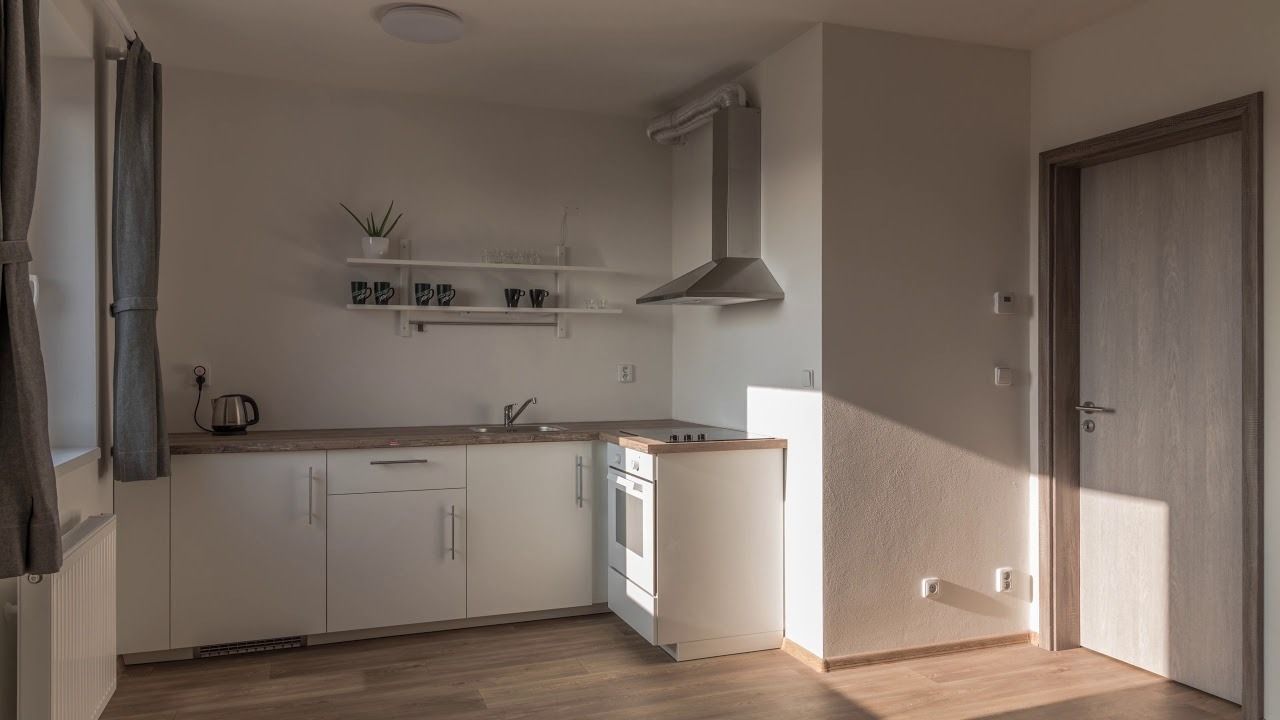
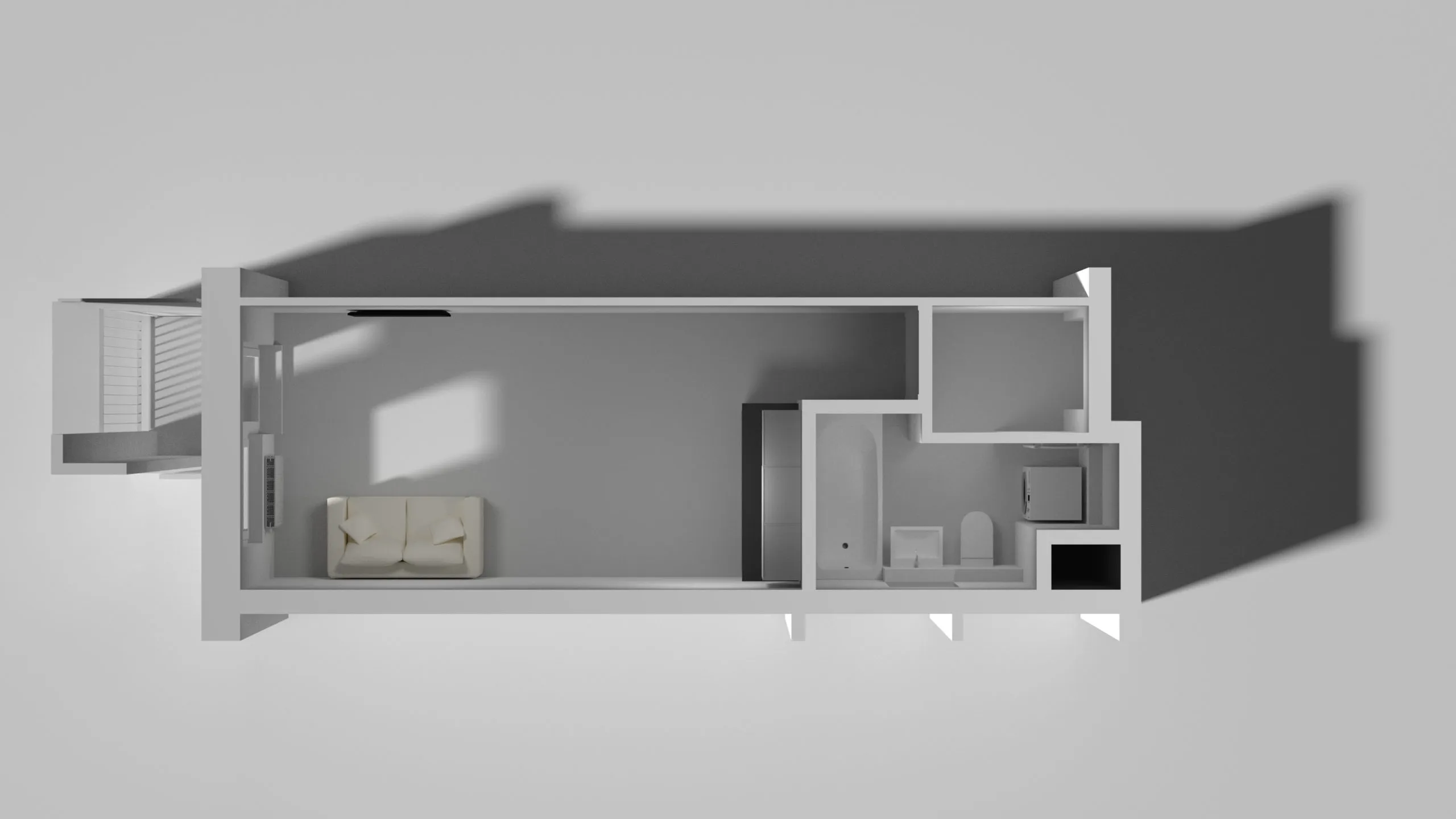
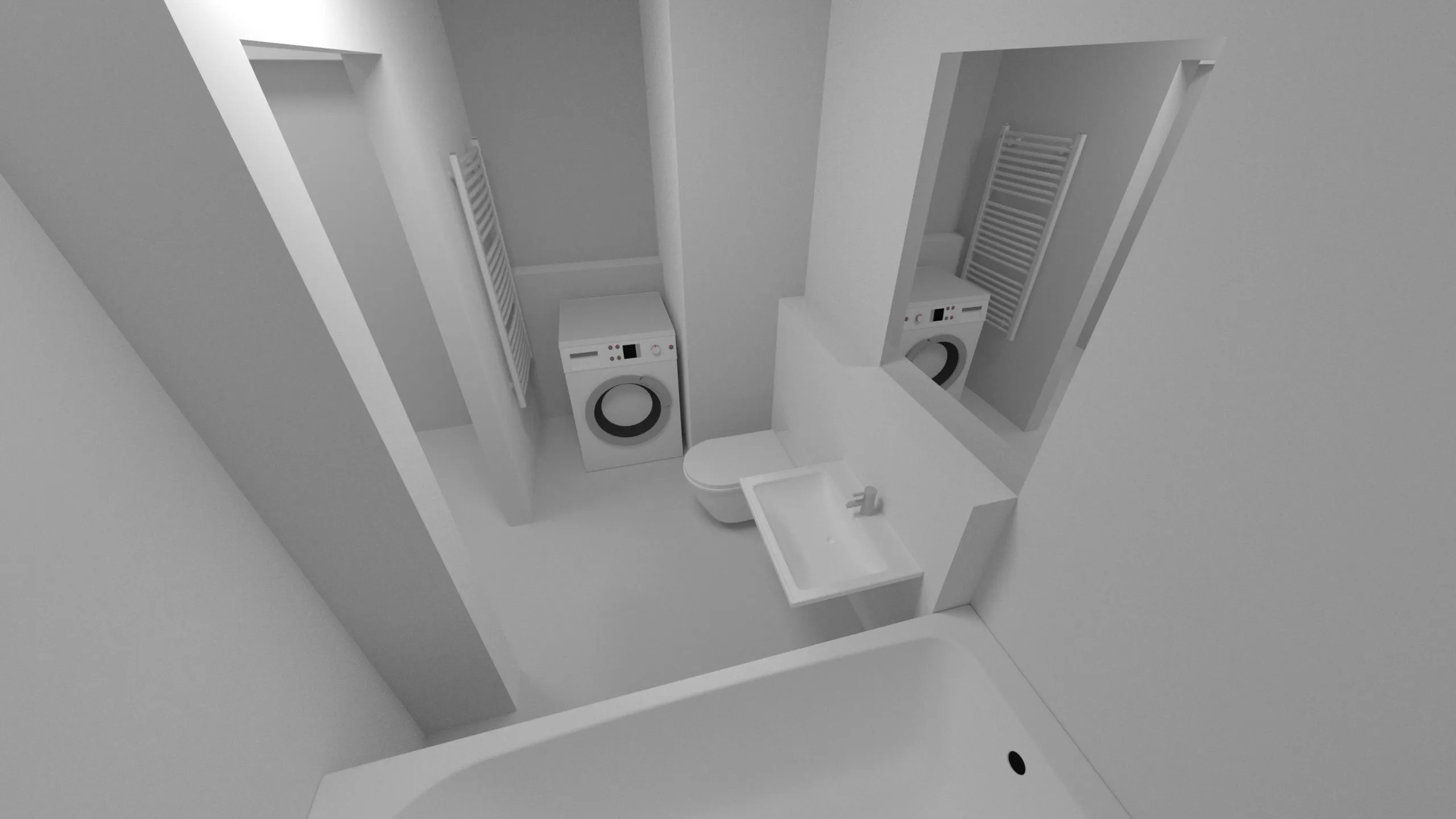
The example above is a diagram. For a real flat or house I build a 3D model including its surroundings and show the sunlight in it as it falls through the window into the room.
The time-lapse shows real light: how sunlight moves through a room over a few hours.
05 Who it is for
Who the simulation helps
-
Buying a flat or house
Before you sign, you know whether the living room will get sun in December too. A viewing shows one day; the simulation shows the whole year.
-
Selling or letting
Sunlight is a strong selling point. Show it with numbers and pictures, not just the word “sunny”.
-
Estate agents and developers
A simulation of the whole building: which floors and flats get sun in winter and which do not. For the listing and for talking to buyers.
What you get
- direct sun for every room and every month of the year: from when to when, and for how long
- the effect of the buildings around: what they block, and in which months
- images from the digital twin: where the sun falls in the room
06 Process
How the simulation is made
-
You tell me about the property
Where the building is, which floor and which rooms you are interested in.
-
I build a digital twin
I model the building and its surroundings, oriented exactly as they stand. It is how I work on sundials, where the shadow has to be right to the minute.
-
I calculate the sun for every window
For every day of the year, with the shadows of the buildings around.
-
You get the result
An overview by room and month, and images from the digital twin.
07 Questions
Frequently asked questions
What does the simulation show?
When and for how long direct sun shines through each window in every month of the year, and how much of it the buildings around block. It also shows where the sunlight falls in the room.
Does the simulation include the weather?
No. It shows direct sun on a clear day. Nobody knows in advance how many days will be clear. The difference between floors and windows holds whenever the sun is out.
Do building rules guarantee sunlight?
No. Czech building regulations require direct sunlight only in rooms of social care homes and in nursery school playrooms, so nothing guarantees it in a new flat.
Can I run the simulation myself?
No, it is not a tool on the website. I do the simulation myself for a particular flat or house. The example on this page is a fixed situation, not your building.
How much will it cost?
Tell me which flat or house it is and what you would like to know. I will send you the price and terms.
For developers
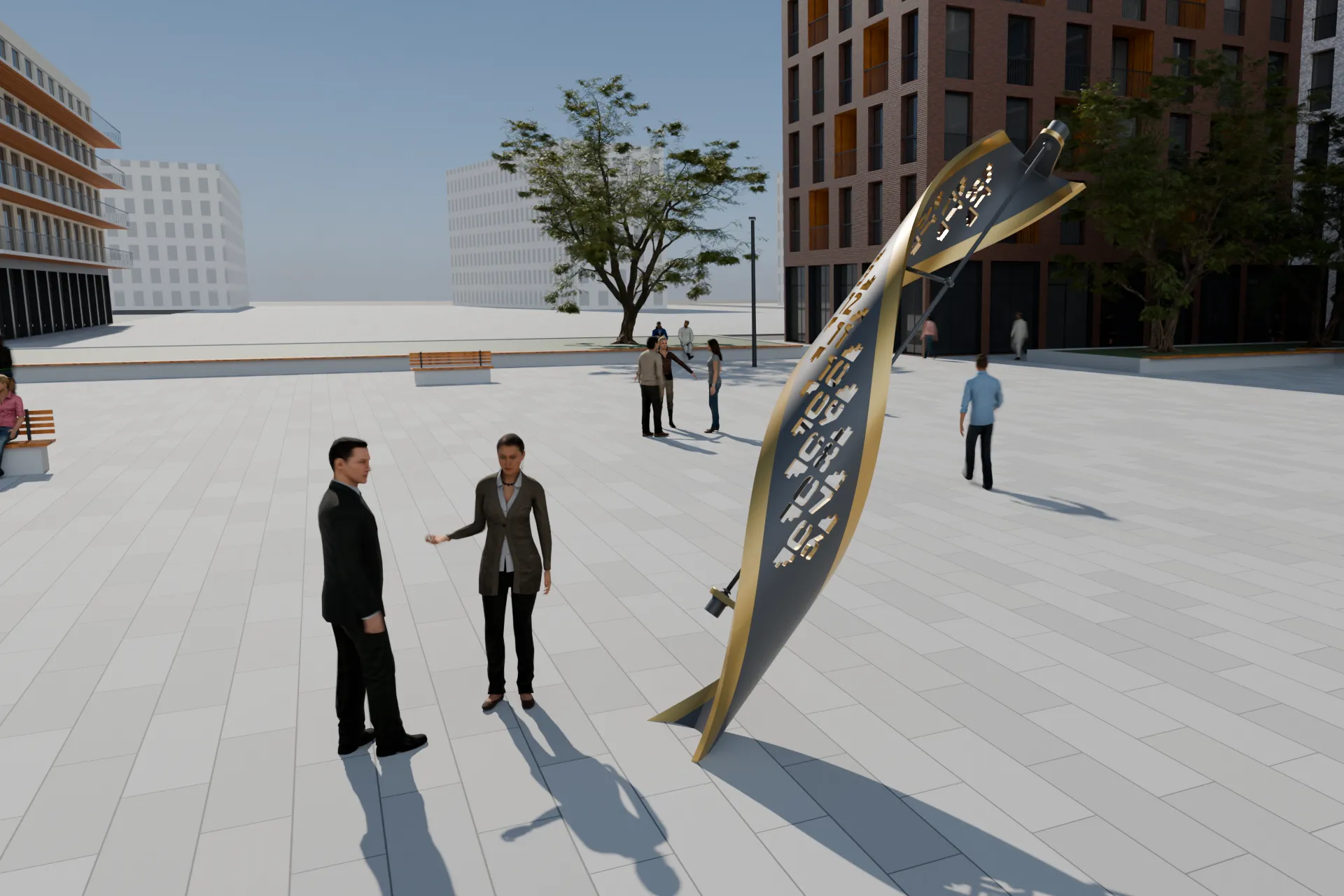
A sundial for new public squares
Is a new square part of your development? A polar sundial gives it a landmark and a meeting place. Light and a cable’s shadow show the time, calculated for your site.
How much sun will your windows get?
Tell me which flat or house it is, where it is and what you would like to know. I’ll get back to you as soon as possible.