Service
Construction time-lapse
I put a camera in a weatherproof housing on your site and it photographs the build from the empty plot to the finished building. Months or years of work then become a 15–30 second video in which the building rises before your eyes.
At a glance
- On site
- months to years
- Resolution
- source frames 24 MP, final video 4K
- Maintenance
- regular on-site servicing, done by me
- Completed
- more than 10 long-term time-lapses for various companies
01 How it works
Day after day, winter and summer
The camera stays on site the whole time and takes a picture at the interval I set, whether it rains, freezes or bakes. It captures the excavation, the foundations, every new floor and the first lit windows. I then turn all the frames into a video in which months of construction fit into half a minute.
02 Client work
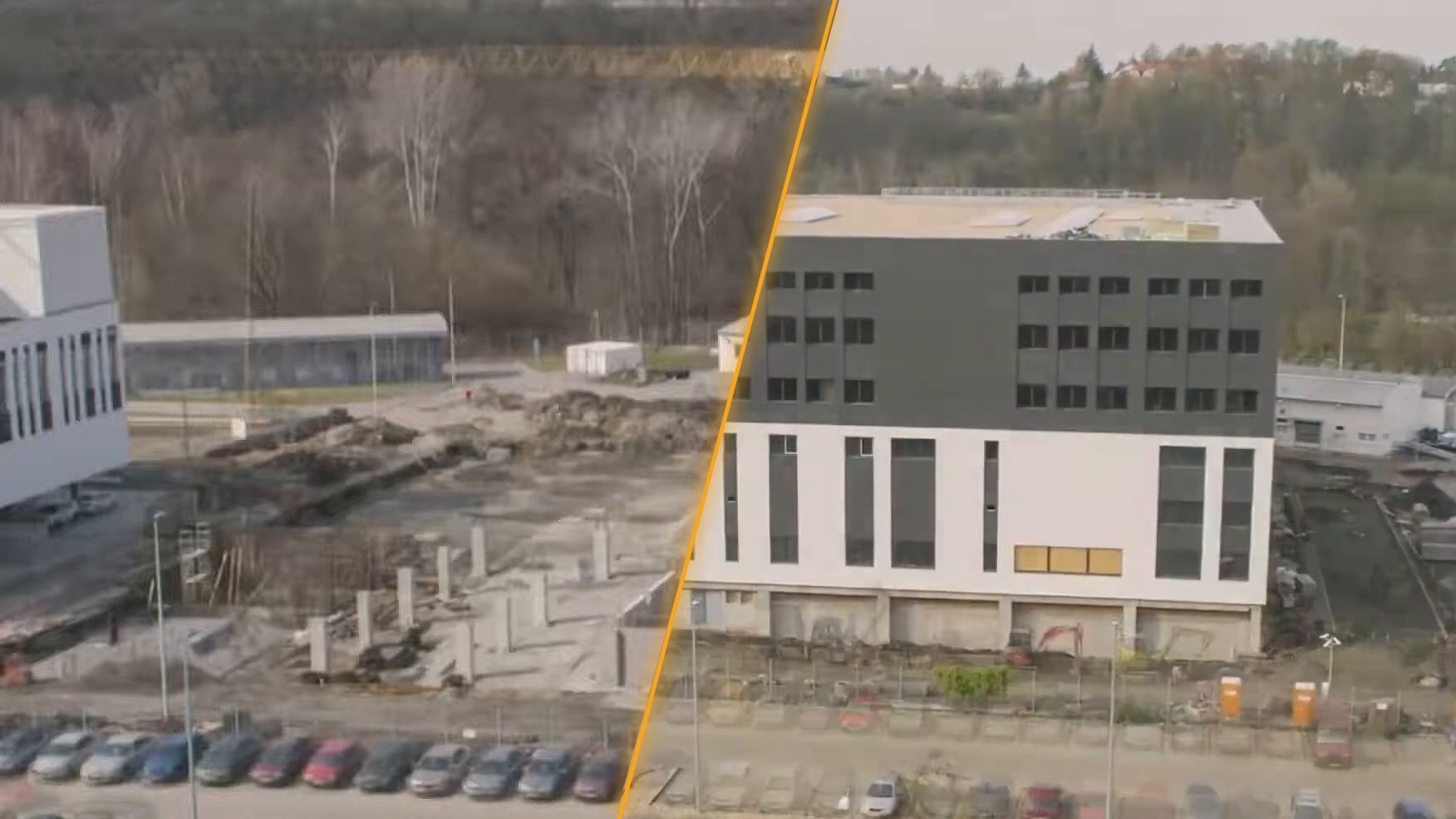
The Technical Development building: 23 months of building in half a minute
I have filmed more than 10 long-term construction time-lapses for various companies. One of them follows the Škoda Auto Technical Development building from the foundations to completion: the camera started shooting when only the foundations and the first columns were in place, and stopped at the finished building, 73 × 73 m in footprint and 26 m high.
The building in numbers
- 23months of construction, about 700 days
- 73 × 73m building footprint
- 26m building height
03 A record of the build
When something collapses, the frames show why
The camera sees the site from the same spot every day, and every frame records when it was taken. If something on site comes loose or collapses, the frames let you trace back what came before it and in what order. The record can show how one operation on site led to another, which would otherwise remain guesswork.
Illustrative example
-
DAY 212 · 08:10
An excavator starts digging a trench for a utility connection, about 4 m from the floodlight mast.
-
DAY 212 · 11:40
The trench is deep and stays open. The mast is still standing straight.
-
DAY 212 · 16:50
A crack has opened by the mast footing and the soil is sliding towards the trench.
-
DAY 213 · 06:30
The mast is down. Without the record, nobody could say when or why it fell.
What the frames showed
- Trench about 4 m from the footing
- Disturbed ground
- Crack by the footing
- Mast falls
An illustrative example, not a real incident.
04 Equipment
A camera rig built to stay on site for months
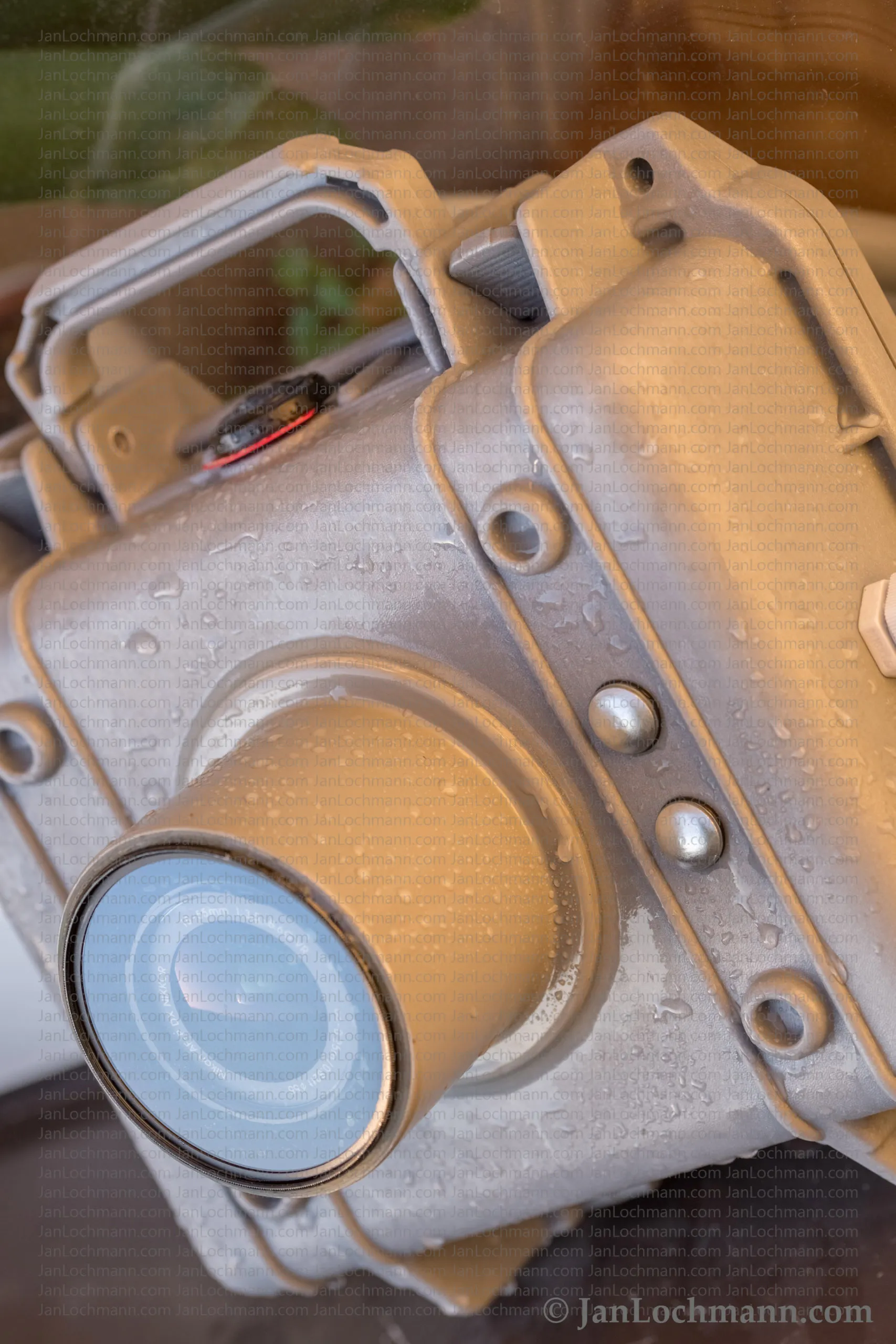
I shoot time-lapses with a high-quality Nikon camera. On site, though, it has to spend months or years outdoors through rain, frost, summer heat and humidity, so I keep it in a weatherproof housing that shields it from the weather.
Inside the housing the camera works on its own: at the interval I set, it takes a picture day after day, whatever the weather. Your build gets a silent witness that records its every step.
05 Resolution
Sharper than 4K straight from a camera
I don’t shoot time-lapses with a conventional 4K video camera but with a Nikon camera and excellent Nikon lenses. Every frame has 24 megapixels, about 6000 × 4000 px. That is roughly three times as many pixels as a 4K video frame (3840 × 2160 px, or 8.3 MP).
So the final 4K video is made from a much larger image, which makes it far sharper than 4K recorded straight by a video camera, such as a CCTV security camera.
There is room to spare in every frame, too: it is 2160 px wider and 1840 px taller than a 4K image. I can crop the shot in post-production or pan slowly across it, and the video stays in full 4K.
- Nikon frame
- 24 MP about 6000 × 4000 px
- 4K video
- 8.3 MP 3840 × 2160 px
- Full HD
- 2.1 MP 1920 × 1080 px
24 MP 25 × 25 px
4K 16 × 16 px
Full HD 8 × 8 px
06 Combined
Camera on the ground and drone
The camera on the ground photographs the build from one spot, start to finish. A drone time-lapse flyover shows it from above: I fly exactly the same route over the site each time and blend the flights into one. The two work well together: the camera on the ground shoots every day and the drone comes in at the key stages of the build.
07 Questions
Frequently asked questions
How long will the final video be?
Usually 15–30 seconds. We agree the length based on where it will be shown: on a website, in a presentation or at the building’s opening.
How long can the camera stay on site?
Months to years. Long time-lapses are my speciality, but I also film things that take just a few days.
How often does it take a picture?
As often as your project needs. I set the interval to suit the length of the build and what the video should show.
Does someone have to visit the site for maintenance?
Yes, the camera needs regular servicing. I do it myself and schedule it so that it doesn’t get in the way of work on site. You don’t have to look after anything, just give me access.
When should I get in touch?
Before the excavators arrive. The empty plot, the “before” shot, can only be filmed once.
What will it cost?
It depends on the build, the schedule and the location. Once I know them, I’ll send you a price and terms.
For developers
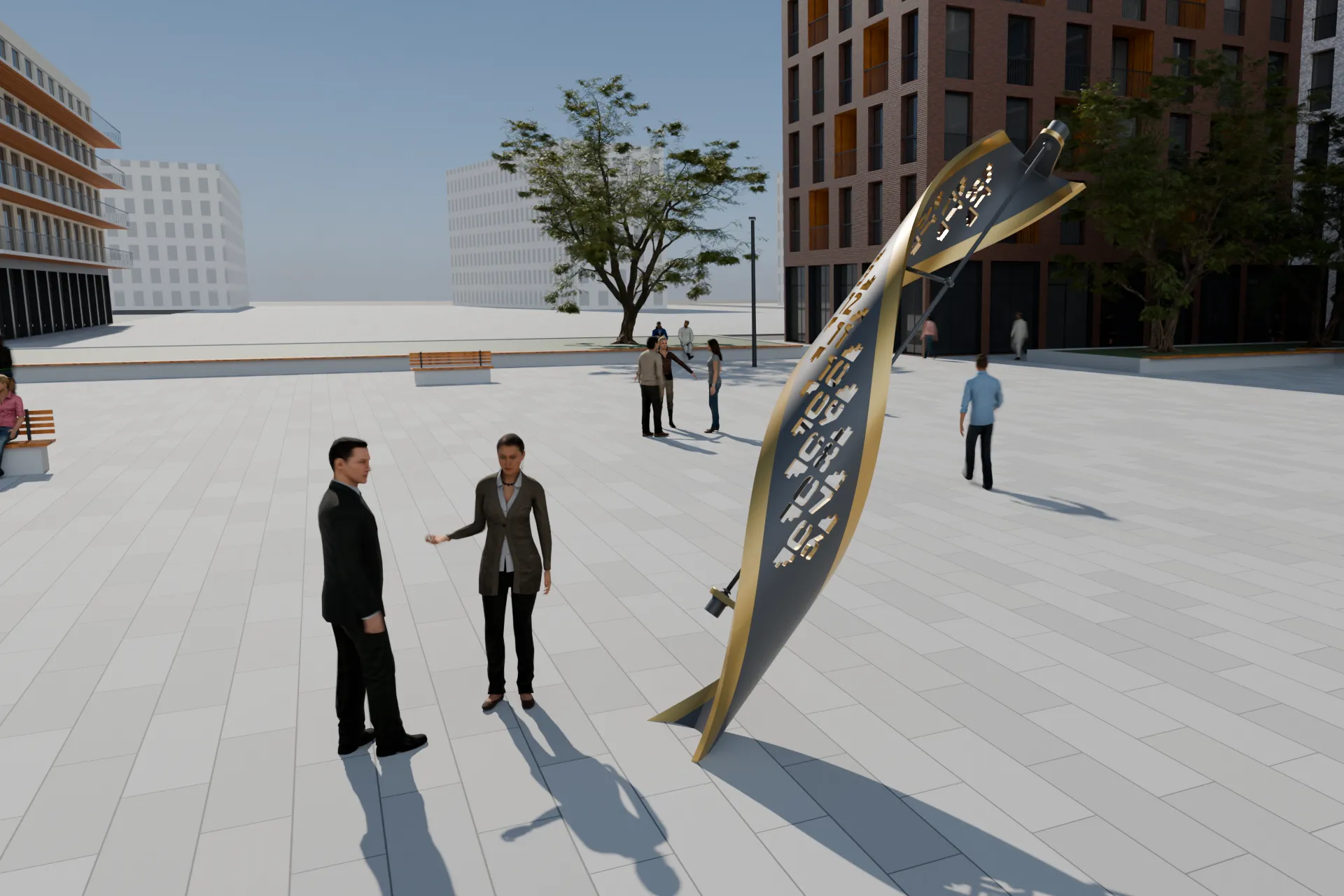
A sundial for new public squares
Is a new square part of your development? A polar sundial gives it a landmark and a meeting place. Light and a cable’s shadow show the time, calculated for your site.
Planning a build?
Tell me what you are building, where, and when work starts. I’ll get back to you as soon as I can.
More services
- Drone photo and video Aerial photos and video, panoramas of entire sites and construction time-lapse flyovers.
- Large-format panoramas A panorama of hundreds of telephoto frames that fills a whole wall.
- Real estate photography Photos of flats and houses for sale or to let, with a sunlight simulation on request.